Overview;
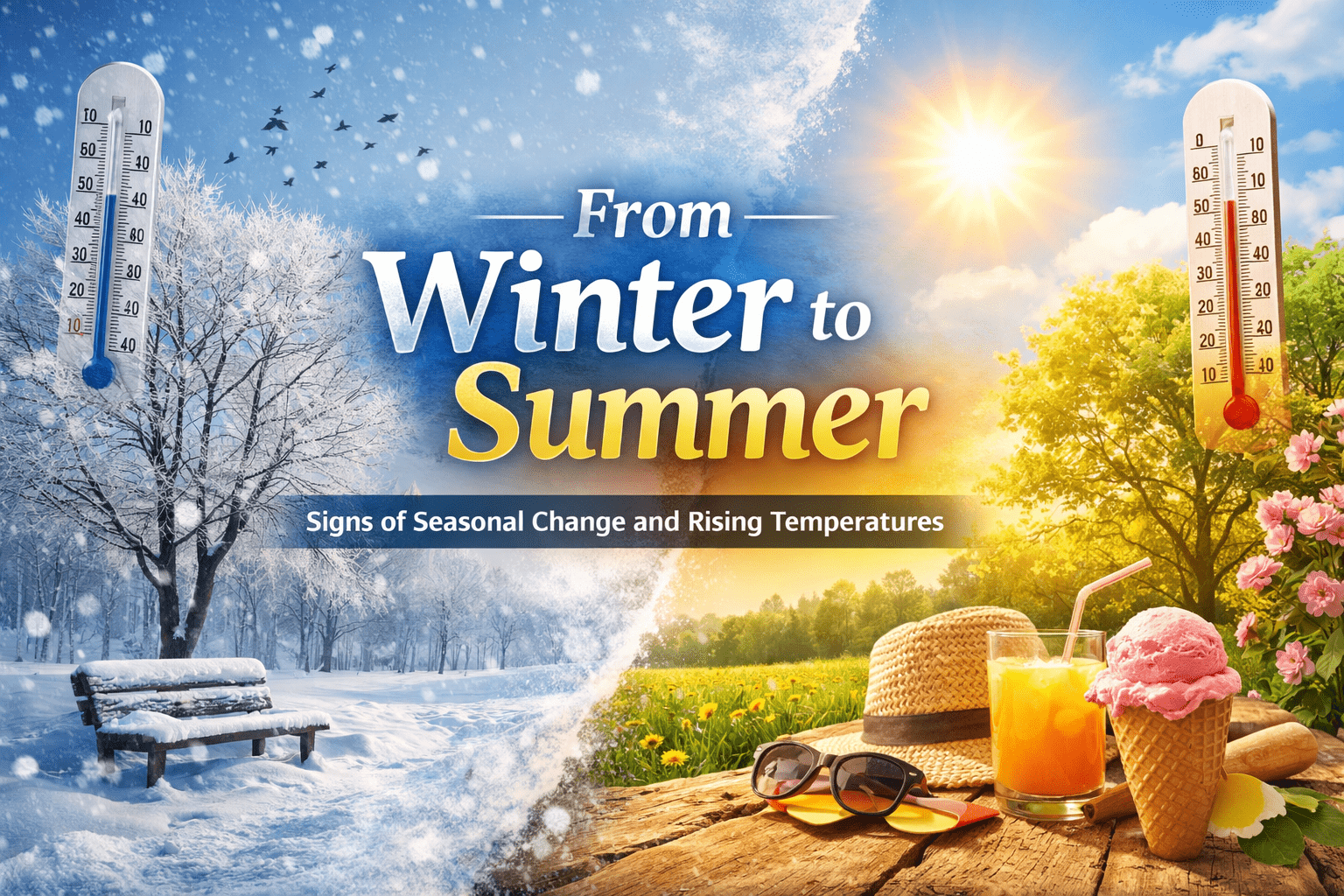
The winter to summer transition is one of the most noticeable seasonal changes of the year. As winter slowly comes to an end, temperatures begin to rise, daylight hours become longer, and nature starts to refresh itself. This gradual shift from cold weather to warmer days affects the environment, human lifestyle, and daily routines.
Understanding the winter to summer transition helps people prepare for rising temperatures and adapt to changing weather conditions smoothly.
Signs of the Winter to Summer Transition
There are several clear signs that indicate winter is ending and summer is approaching.
1. Gradual Rise in Temperature
One of the first signs of the winter to summer transition is the steady increase in temperature. Cold mornings become milder, and afternoons feel noticeably warmer. Over time, even the nights lose their winter chill.
2. Longer Days and Shorter Nights
As the season changes, daylight hours increase. The sun rises earlier and sets later, making the days longer. Increased sunlight plays a major role in rising temperatures and signals the start of summer.
3. Warmer and Brighter Sunlight
During this seasonal change, sunlight becomes stronger and more direct. The warmth of the sun is clearly felt, especially during midday hours.
Environmental Changes During Seasonal Shift
Nature beautifully reflects the winter to summer transition. Trees that looked dry during winter begin to grow fresh green leaves. Flowers bloom in gardens and parks, adding bright colors to the environment.
Birds become more active, and outdoor spaces feel lively again. Grass grows greener, and landscapes regain their natural beauty. These environmental changes clearly show that summer is near.
Farmers also observe this seasonal shift carefully, as rising temperatures affect crop growth and irrigation needs.
Lifestyle Changes from Winter to Summer
The winter to summer transition brings noticeable lifestyle adjustments.
- Heavy winter clothes like coats and sweaters are replaced with light cotton outfits.
- Heaters are turned off, and fans or air conditioners start running.
- People prefer cold drinks, fresh juices, and seasonal fruits.
- Outdoor activities increase due to longer daylight hours.
These small changes help individuals stay comfortable during rising temperatures.
Health and Hydration in Warmer Weather
As summer approaches, staying hydrated becomes very important. Higher temperatures can cause dehydration and fatigue. Drinking plenty of water, eating fresh fruits, and avoiding direct sunlight during peak hours help maintain good health.
Light clothing and proper ventilation at home also reduce heat discomfort.
Importance of Understanding Seasonal Change
The winter to summer transition is part of Earth’s natural climate cycle. Seasonal change occurs due to the Earth’s tilt and its movement around the sun. These natural processes regulate temperature patterns and maintain environmental balance.
However, climate change in recent years has affected seasonal patterns in some regions, making summers longer and hotter. Being aware of these changes helps people prepare better and protect the environment.
Conclusion
The winter to summer transition is a gradual yet powerful seasonal change. Rising temperatures, longer days, blooming flowers, and lifestyle adjustments all mark the beginning of summer. By understanding these signs, individuals can adapt comfortably and stay healthy during warmer months.
Seasonal transitions remind us of nature’s continuous cycle and the importance of preparing for climate changes ahead.